Funnler
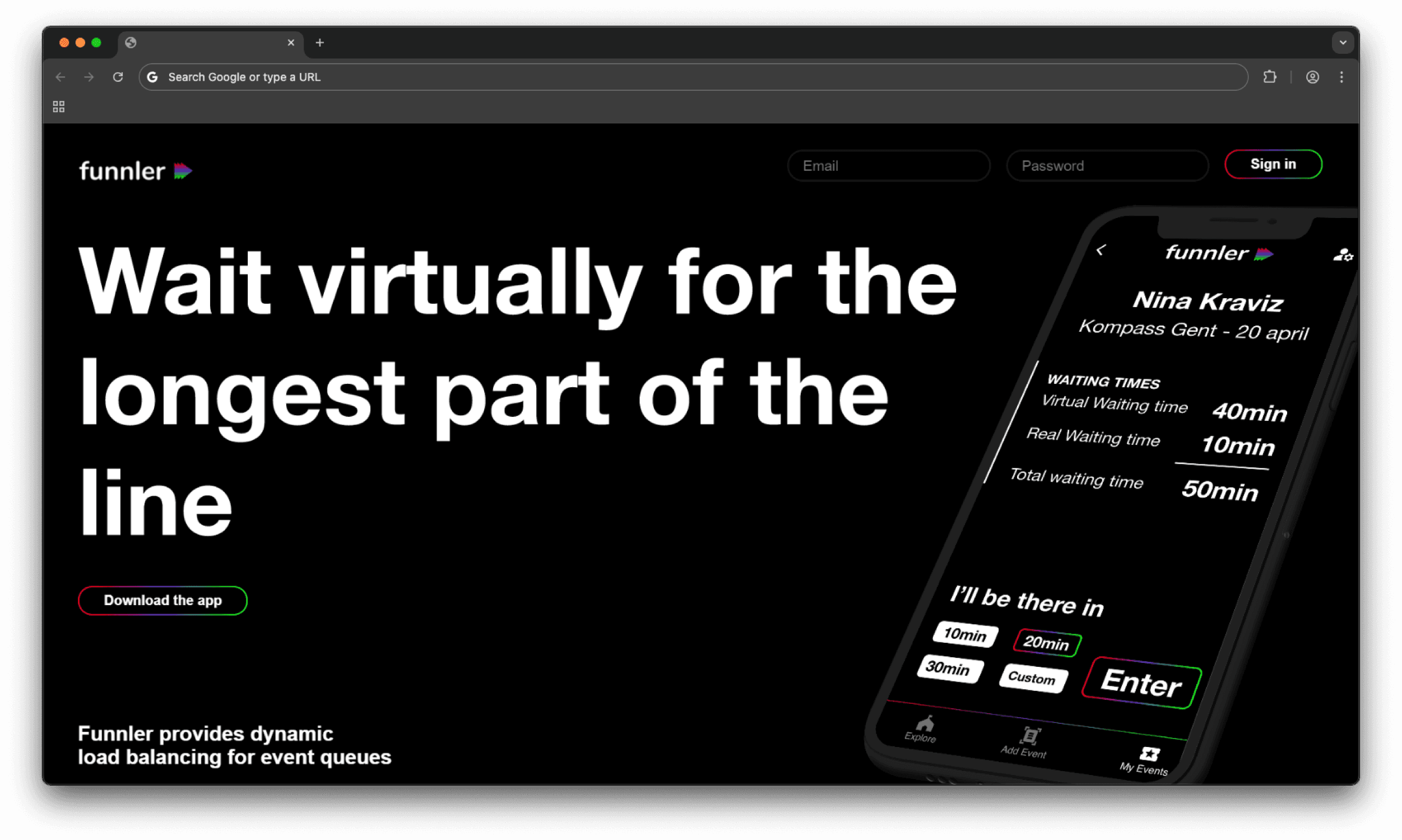
Scalable virtual queueing system for large events
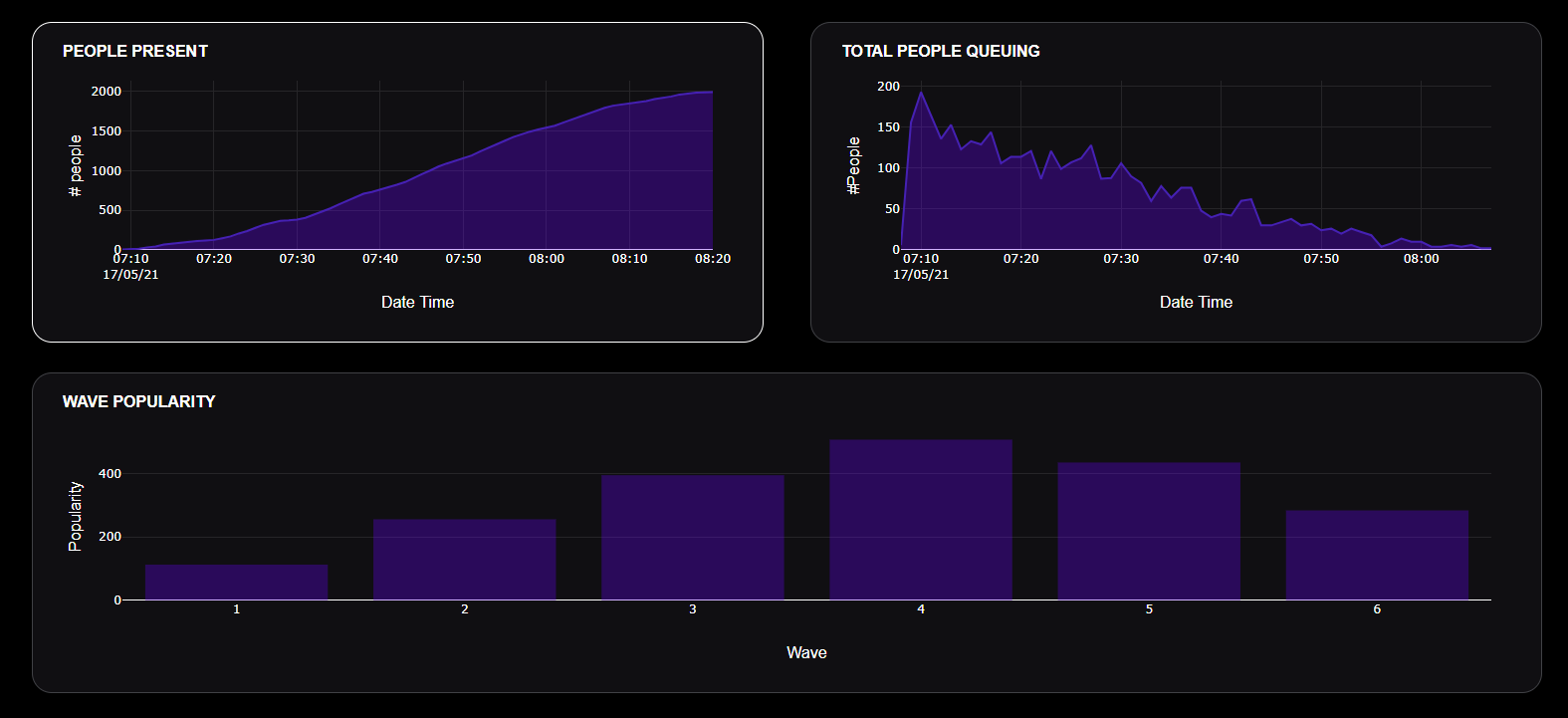
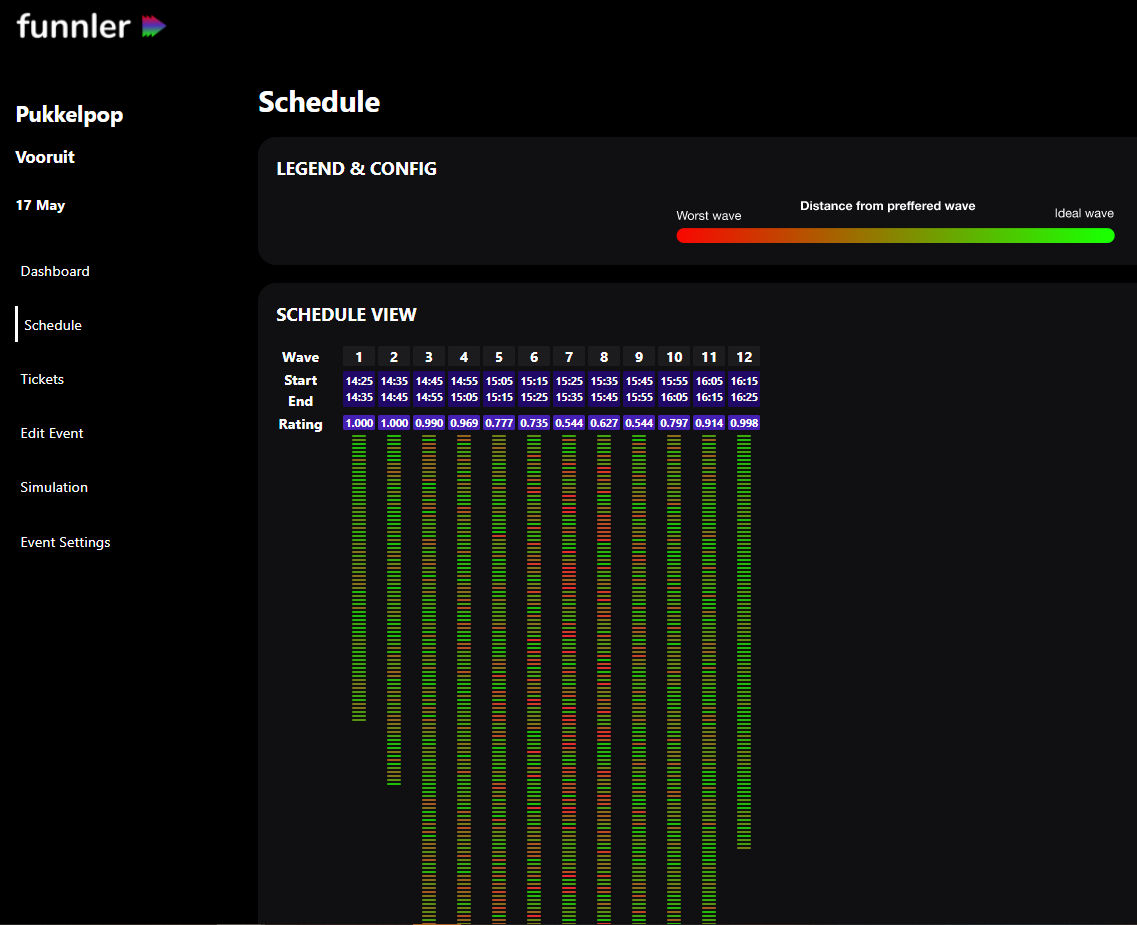
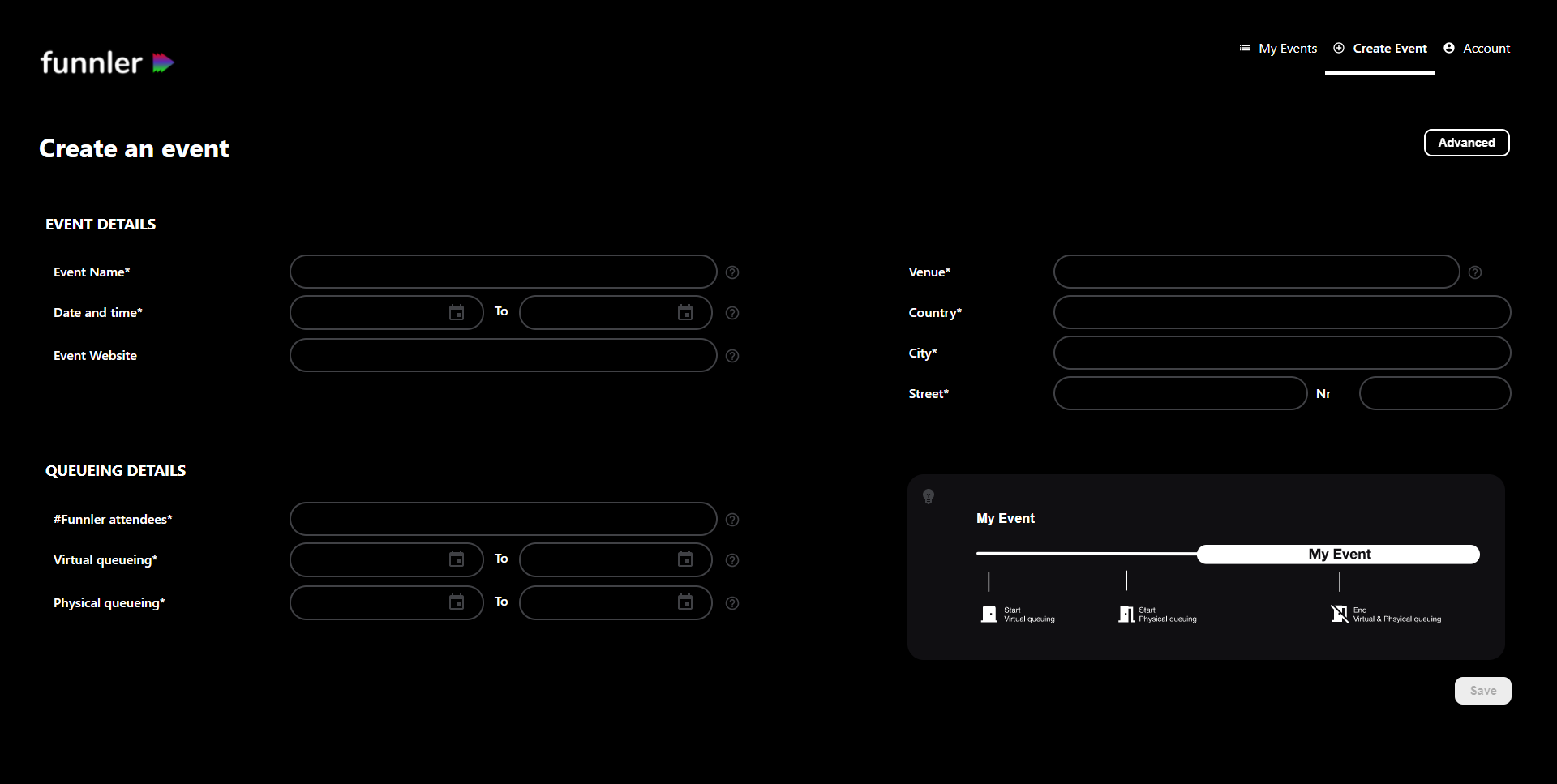
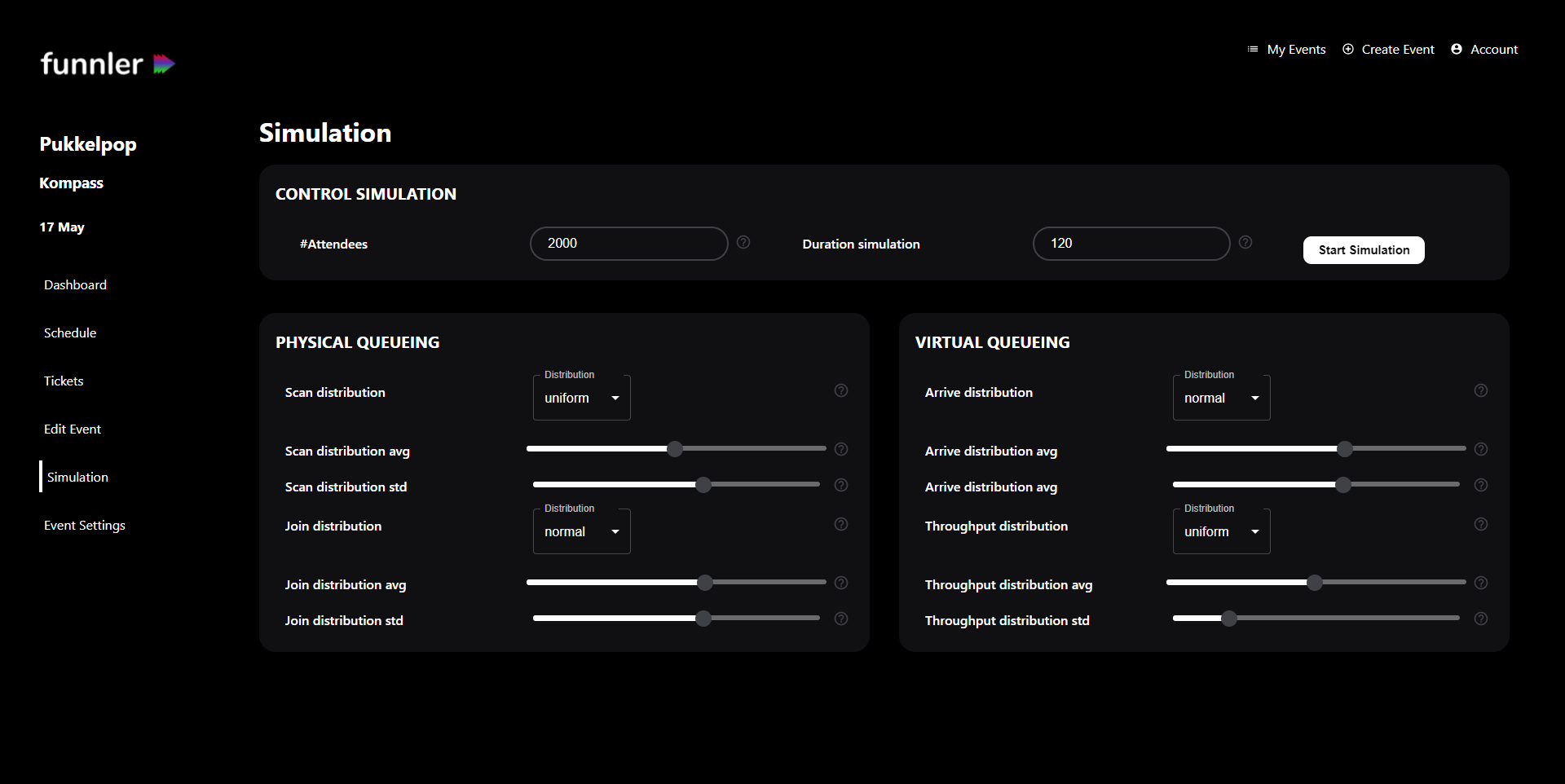
Full-year engineering project in a team of eight, selected as one of the winning concepts. We built funnler, a production-grade system that lets attendees of large events join a virtual queue instead of standing in line, reducing real waiting time through wave-based scheduling. The system included a React Native app for iOS/Android (attendee flow) and a React web app for organizers featuring simulation tools, event configuration, and real-time queue visualization (heatmaps, throughput graphs, state tracking). All images below are real screenshots from the running system (full backend and frontend integration), no mockups.
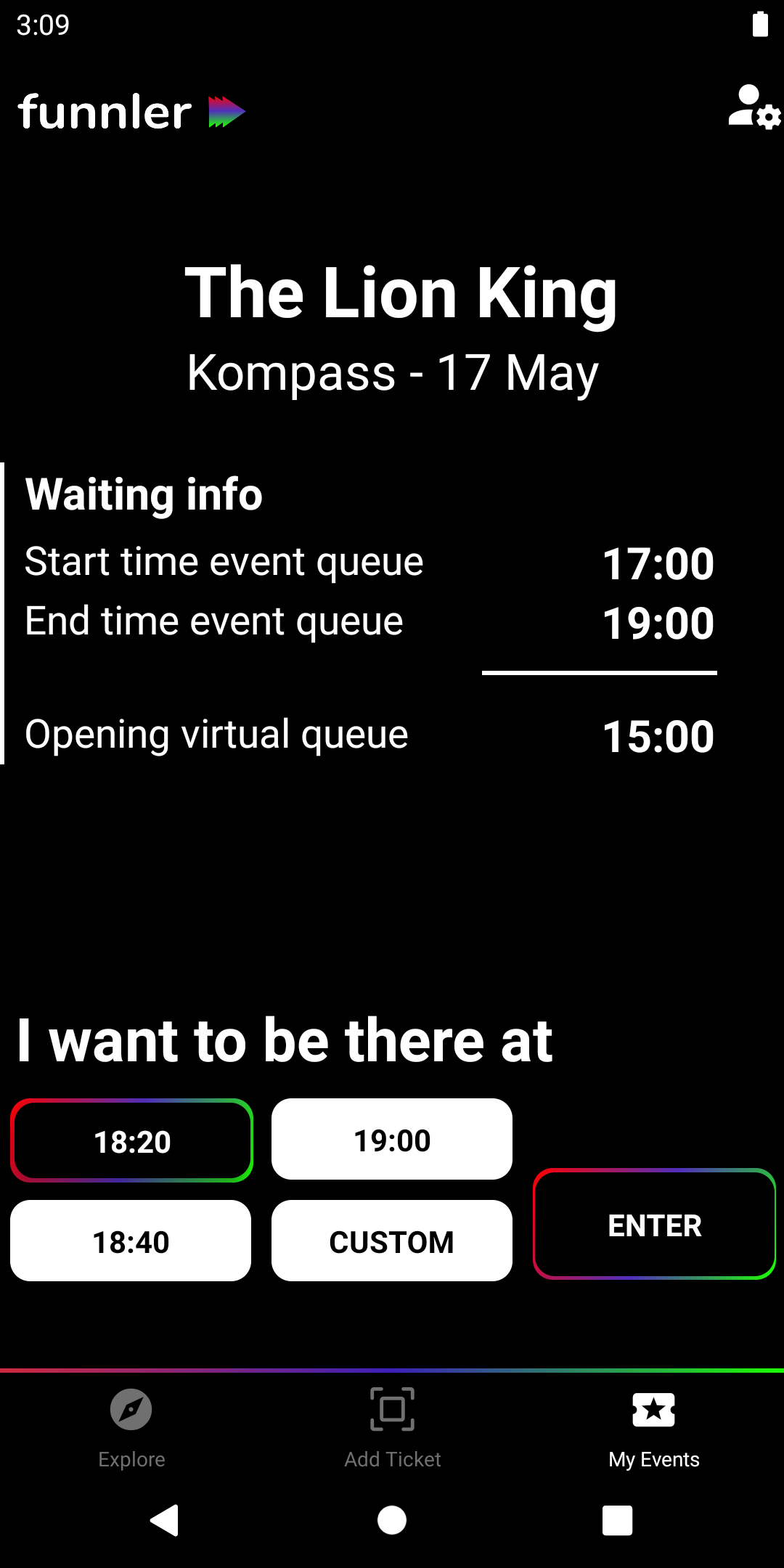
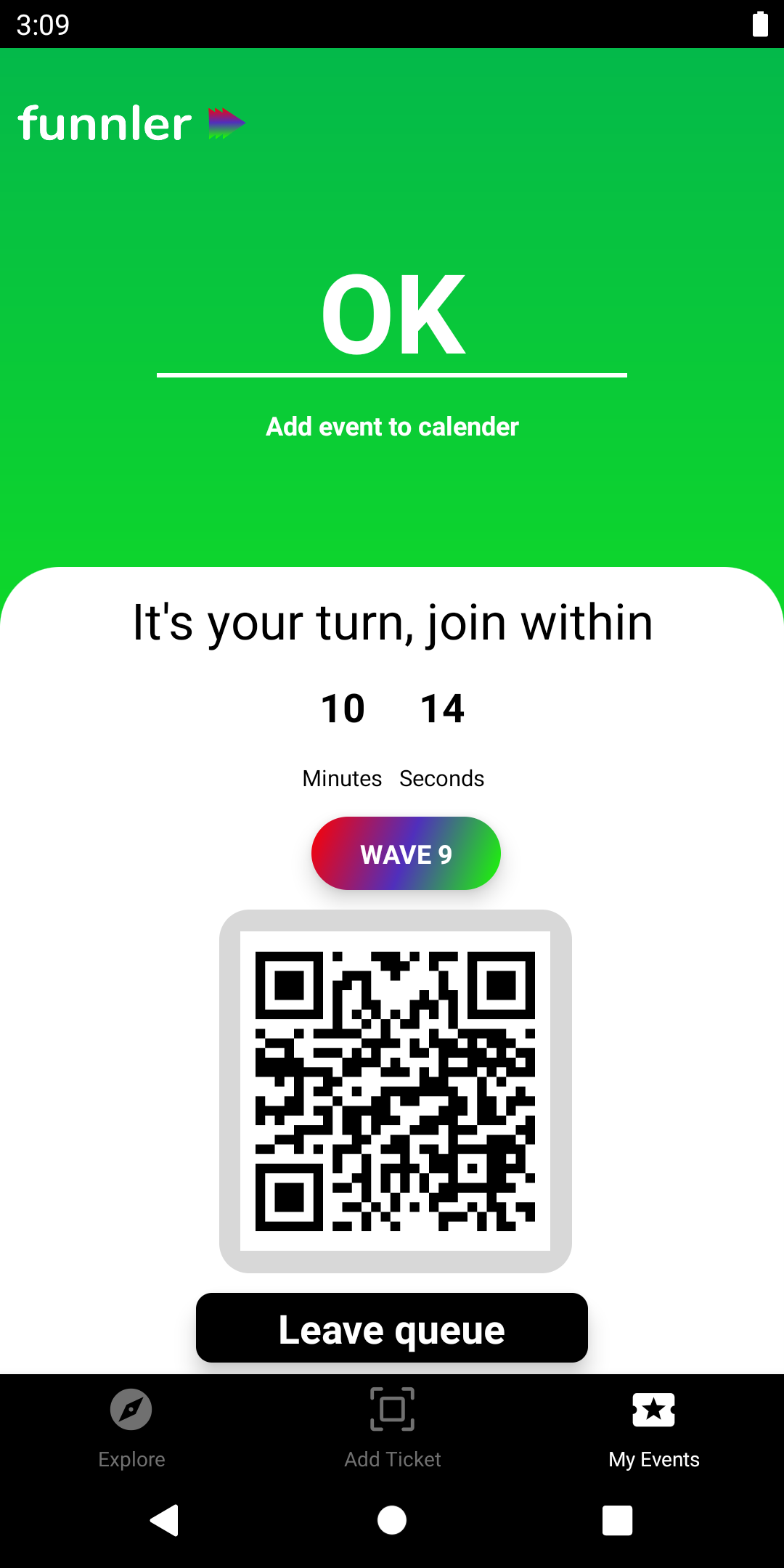
Backend architecture consisted of multiple stateless Python microservices (Flask), responsible for scheduling, queue orchestration, statistics, payment handling, and simulation logic. Services communicated over REST with JWT/Firebase-backed auth, while RabbitMQ handled asynchronous scheduling events. All components were deployed on bare-metal Kubernetes with autoscaling, monitored through Grafana, and supported by a full CI/CD pipeline in GitLab.
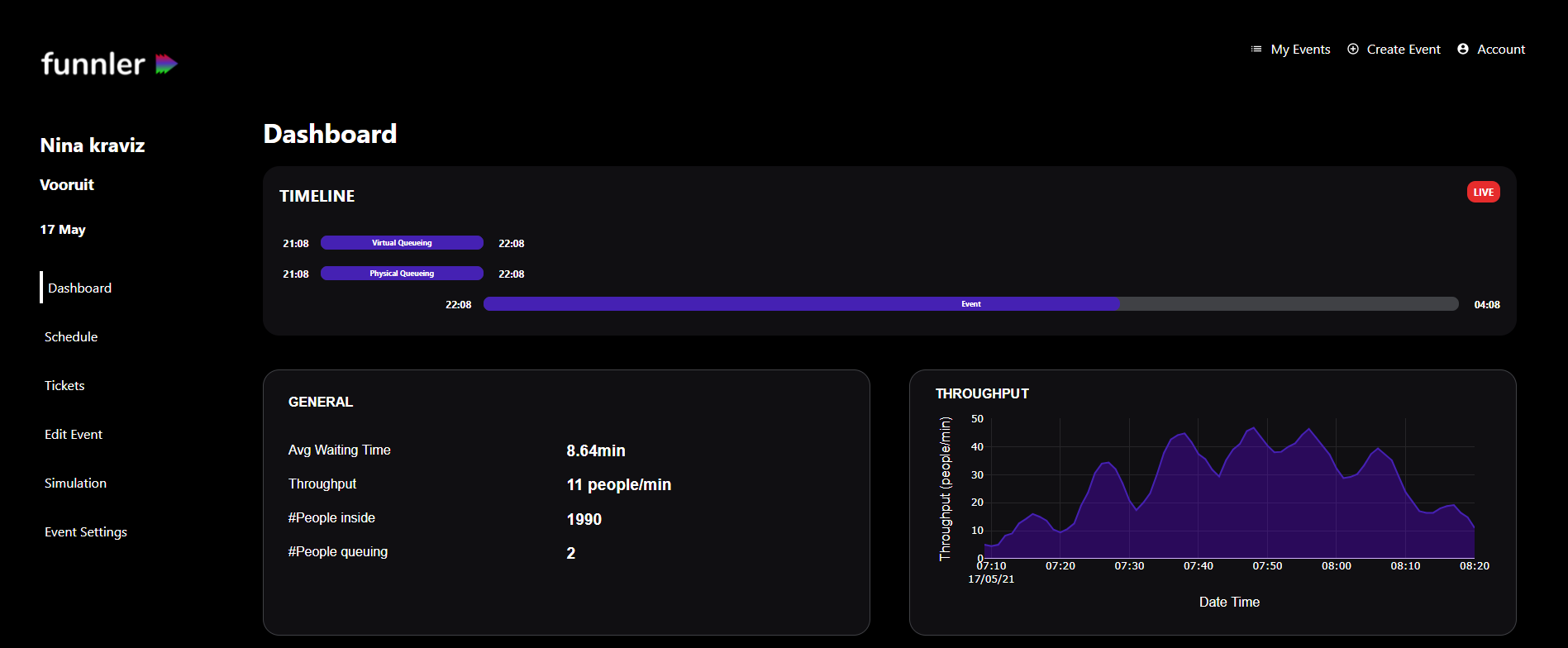
As project manager and developer, I led two-week Scrum cycles, coordinated a team of eight, and structured the project into subteams and procedures. Technically, I contributed to the front-end apps, the scheduler, and the visual & product design (branding, UX flows). The result was a fully working system capable of supporting thousands of concurrent users, complete with local Docker-Compose environments and end-to-end integration testing.
Motivation & impact
Everyone spends an absurd amount of time queueing. funnler targets that problem at medium- to large-scale events by turning most of the “funnel” into a virtual queue, so people can wait elsewhere and only join a short physical line when their wave opens. For organizers, the system provides tools to smooth arrivals, simulate different scenarios, and monitor live metrics like throughput, people present, and total queue length. This not only improves attendee experience (less standing around) but also helps organizers plan staffing, avoid bottlenecks, and make events safer and more manageable—something that was especially relevant in the COVID period when we conceived the idea.